


 Cart
Cart
 sales@molnova.com


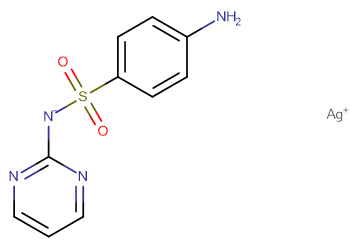
Silver sulfadiazine
CAS No. 22199-08-2
Silver sulfadiazine( —— )
Catalog No. M13540 CAS No. 22199-08-2
It is a topical antibiotic used in partial thickness and full thickness burns to prevent infection.
Purity : >98% (HPLC)
 COA
Datasheet
HNMR
HPLC
MSDS
Handing Instructions
COA
Datasheet
HNMR
HPLC
MSDS
Handing Instructions
| Size | Price / USD | Stock | Quantity |
| 200MG | 31 | In Stock |


|
| 500MG | 50 | In Stock |
|
| 1G | Get Quote | In Stock |
|
Biological Information
-
Product NameSilver sulfadiazine
-
NoteResearch use only, not for human use.
-
Brief DescriptionIt is a topical antibiotic used in partial thickness and full thickness burns to prevent infection.
-
DescriptionIt is a topical antibiotic used in partial thickness and full thickness burns to prevent infection.
-
In VitroSilver sulfadiazine (AgSD) is a topical antibiotic used to the research of bacterial infection in burns.
-
In Vivo——
-
Synonyms——
-
PathwayMicrobiology/Virology
-
TargetAntibiotic
-
RecptorAntibiotic
-
Research Area——
-
Indication——
Chemical Information
-
CAS Number22199-08-2
-
Formula Weight357.14
-
Molecular FormulaC10H9AgN4O2S
-
Purity>98% (HPLC)
-
SolubilityN/A
-
SMILESC1=CN=C(N=C1)[N-]S(=O)(=O)C2=CC=C(C=C2)N.[Ag+]
-
Chemical Name——
Shipping & Storage Information
-
Storage(-20℃)
-
ShippingWith Ice Pack
-
Stability≥ 2 years
Reference
1.Marx, John et al. Elsevier Health Sciences. p. 814
molnova catalog



related products
-
Surfen dihydrochlori...
Surfen dihydrochloride (Aminoquinuride dihydrochloride) is a potent small molecule antagonist of heparin sulfate with antibacterial and antiviral activity.
-
REV 5901A
REV 5901A (REV 5901 HCl) is an orally active leukotriene receptor antagonist and 5-lipoxygenase inhibitor with antimicrobial activity that attenuates colon cancer growth in mice.
-
Florfenicol amine hy...
Florfenicol amine hydrochloride is a synthetic veterinary antibiotic with antimicrobial activity.Florfenicol amine hydrochloride is widely used in aquaculture and ranching for the study of diseases caused by Bartonella, Edwardsiella, Escherichia coli, and Salmonella.
